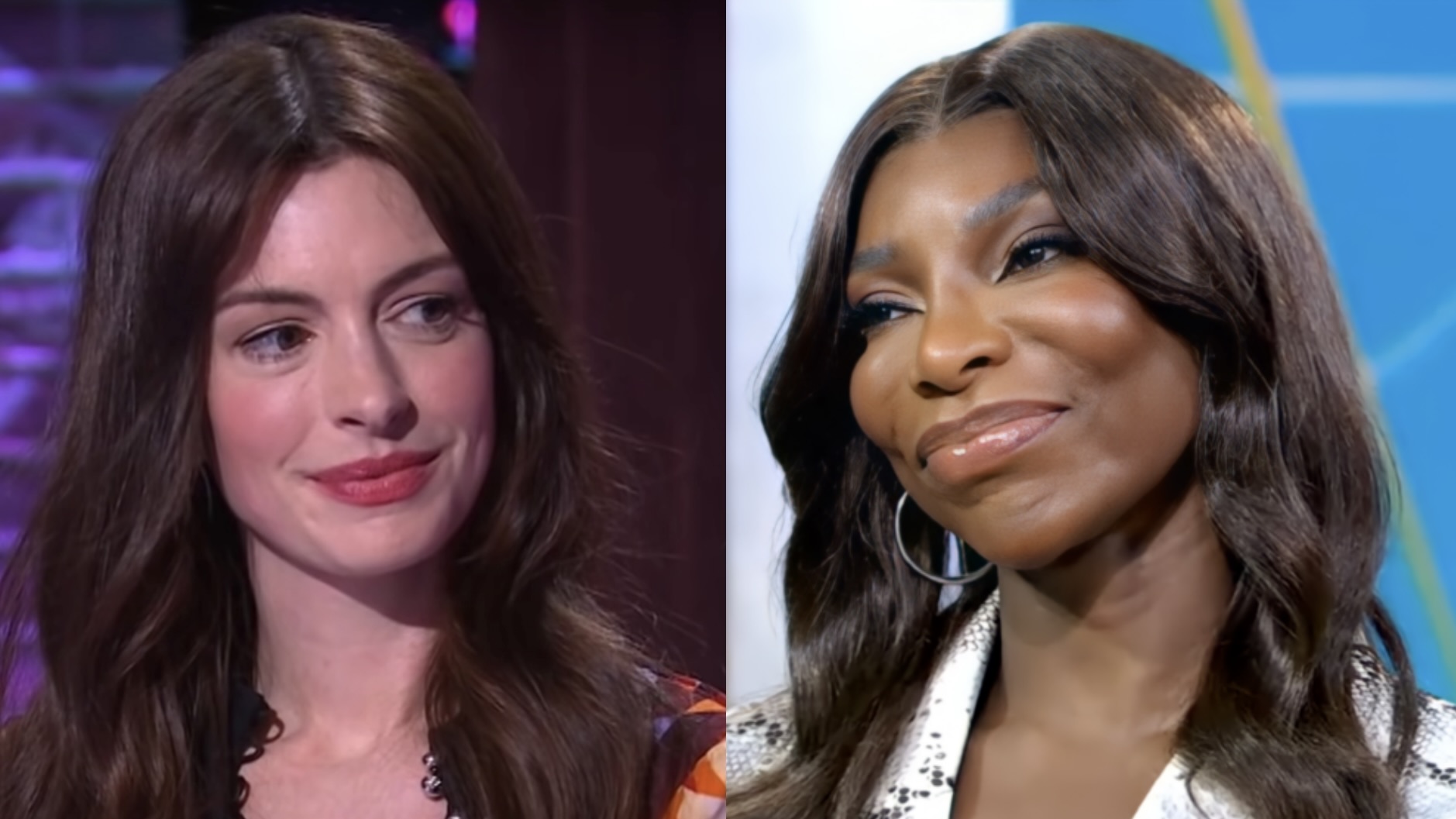
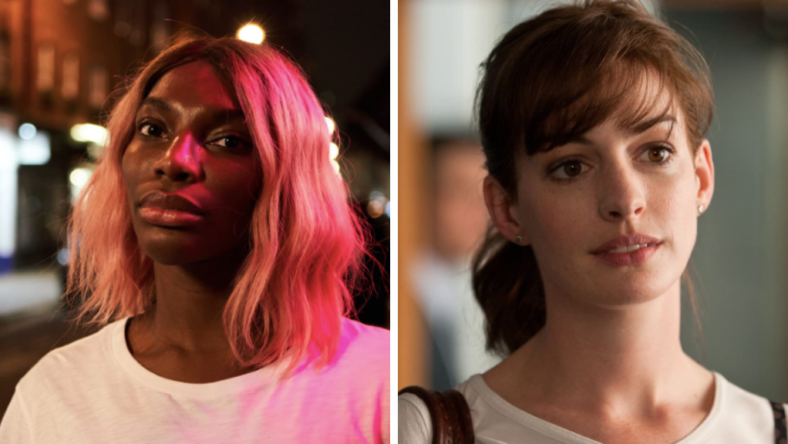
Red carpet moments come and go—some remembered for fashion, some for drama. But every now and then, a moment emerges that transcends trends and gossip. It’s not about the designer gown or the camera flash. It’s about humanity. That’s exactly what happened when Anne Hathaway literally turned her dress into a curtain to shield Michaela Coel from a wardrobe malfunction. In real time, without hesitation, Hathaway transformed her flowing train into a privacy screen. It was quick, classy, and utterly selfless—a quiet act that exploded across social media and left fans saying, “I’m obsessed.”
This wasn’t a scripted PR stunt. It wasn’t a photo-op engineered for clout. It was instinctive decency in a space often criticized for its artifice. In an industry where attention is currency, Hathaway gave her spotlight to protect someone else’s dignity. And in doing so, she redefined what red carpet solidarity looks like.
The Moment: A Split-Second Act of Grace
It happened at a high-profile premiere—cameras swarming, photographers shouting names, stylists hovering. Michaela Coel, dressed in a sleek, structured gown with an open back and delicate straps, was mid-interview when a fast gust of wind and an awkward turn threatened to expose more than intended. One strap slipped. The neckline dipped dangerously. A wardrobe malfunction loomed.
Before Coel could react, Anne Hathaway—who was standing just behind her—moved.
Without breaking conversation or drawing attention, Hathaway stepped forward, pivoted slightly, and used the wide, flowing silk train of her own gown to drape between Coel and the nearest camera cluster. It wasn’t a dramatic flourish. It was subtle, smooth, and perfectly timed—like a curtain drawn over a private moment.
Photographers later admitted they didn’t even realize what had happened until reviewing their shots. By then, the crisis had passed. Coel adjusted, the strap was secured, and the interview continued. But the image—Hathaway’s dress fanning out like a shield—spread like wildfire.
Why This Moment Resonates Beyond the Red Carpet
Let’s be honest: wardrobe malfunctions aren’t rare. Stars have faced everything from nip slips to full-on exposed backsides. What makes this different is the response.
Most celebrities might look away, offer a sympathetic glance, or even chuckle nervously. Hathaway did something no one else did: she intervened. And she did it without grandstanding.
This wasn’t just fashion etiquette. It was emotional intelligence in motion. In a culture where women are often pitted against each other—especially in Hollywood—Hathaway’s gesture was a quiet but powerful rejection of that narrative. She didn’t wait for a cue. She didn’t seek permission. She saw a peer in a vulnerable position and acted.
Fans took to Twitter, Instagram, and TikTok with reactions like “I’m obsessed,” “This is what sisterhood looks like,” and “Anne Hathaway is the guardian angel we don’t deserve.” Memes followed—her train photoshopped into everything from shower curtains to royal canopies—but the underlying message was serious: we crave authenticity, and we reward it when we see it.
The Unspoken Rules of Red Carpet Comradery
While no official manual exists, there’s an understood code among A-listers on the red carpet. It’s rarely spoken but consistently observed:
- Don’t point out flaws. If someone has a stain, a tear, or a slipping strap, you don’t stare. You don’t signal. You don’t whisper.
- Create space when needed. A well-placed hand, a strategic step forward, or a sudden laugh can redirect attention.
- Protect privacy, even in public. The red carpet is a performance, but it’s still a human being underneath the couture.
Hathaway didn’t just follow the rules—she elevated them. She didn’t just shield Coel’s back; she safeguarded her dignity. In an era where a single photo can go viral in seconds, that kind of protection is priceless.
Other stars have had similar moments. Lupita Nyong’o once subtly tugged a fellow actress’s hemline when it began to ride up. Daniel Kaluuya once physically stepped between a paparazzo and a visibly upset co-star. But Hathaway’s move stands out because of how natural it looked. There was no performance—only action.
Fashion as a Tool for Protection
We talk about fashion as expression, as art, as status. But rarely do we acknowledge fashion as function in moments like this.
Hathaway’s dress—a floor-length, ivory gown with a dramatic train—was designed for elegance. But in that instant, it became utilitarian. The fabric, likely silk or satin, was wide enough and stiff enough to create a visual barrier. The color helped too—light tones reflect light and draw attention, which ironically made her more conspicuous so others wouldn’t be.
Stylists often debate train length, fabric weight, and movement. Now, there’s a new consideration: Can this dress protect someone?
It’s a small shift in thinking, but meaningful. Because fashion isn’t just about how you look—it’s about how you move through the world. And sometimes, how you help others do the same.
The Social Media Aftermath: Why
We Can’t Let Go
Within hours, #AnneHathawayCurtain had trended globally. Clips of the moment racked up millions of views. Articles called it “the most elegant save in red carpet history.” Fashion critics analyzed the dress cut. Psychologists praised the emotional intelligence on display.
But more than that, people connected with it personally.
Comments revealed deeper longings: - “I wish someone had my back like that at work.” - “This is the kind of friend I want to be.” - “Imagine if all women protected each other like this?”
The obsession isn’t just about the act—it’s about what it represents. In a world that often feels cold, hierarchical, and performative, here was a moment of warmth, equality, and care.
And let’s not underestimate the power of seeing women support women. Not for optics. Not for awards. But because it was the right thing to do.
What We Can Learn from Hathaway’s Move
You don’t need a designer gown to protect someone’s dignity. But you can adopt the mindset.
Here’s how to bring that energy into everyday life:
- Be observant. Notice when someone is uncomfortable—even if they don’t say it.
- Act discreetly. The best help is often invisible. Draw attention away, not toward.
- Don’t wait for permission. Hesitation can turn a small issue into a big one.
- Use what’s around you. A jacket, a bag, a well-timed question—tools are everywhere.
- Stay calm. Panic amplifies embarrassment. Composure contains it.
In workplaces, social events, or even family gatherings, these principles apply. Someone spills a drink? Step in with a napkin and a joke. Someone says something awkward? Redirect with grace. These aren’t grand gestures—but they build trust.
Hathaway didn’t win an award for what she did. But she modeled something awards can’t capture: character.
Michaela Coel’s Response: Quiet Gratitude
Coel, known for her sharp intellect and emotional honesty, addressed the moment days later in an interview.
“She didn’t make a show of it,” Coel said. “She just did it. And in that moment, I felt seen and safe. That’s rare. And that’s powerful.”
She didn’t gush. She didn’t over-praise. But her words carried weight. For someone who has spoken openly about vulnerability, trauma, and the pressure of public life, that moment of protection likely meant more than most realize.
And Hathaway? She didn’t seek credit. When asked, she simply said, “I was just standing there. Anyone would’ve done the same.”
But not everyone did. And that’s exactly why we’re still talking about it.
Closing: Be the Person
With the Curtain
We can’t all wear couture gowns with sweeping trains. But we all have moments where we can be someone’s shield.
It doesn’t take a red carpet. It takes awareness. It takes empathy. It takes the courage to step forward—not for the cameras, but for the person beside you.
Anne Hathaway didn’t just save a moment. She reminded us that kindness doesn’t need a stage. Sometimes, it just needs a dress, a breeze, and the instinct to protect.
Be the one who moves first. Be the one who draws the curtain. Be the person people are obsessed with—not for your looks, but for your heart.
FAQ
What event was Anne Hathaway and Michaela Coel attending? They were at a major film premiere, though the exact event hasn’t been officially confirmed in all reports.
Did Michaela Coel have a full wardrobe malfunction? No—thanks to Hathaway’s quick action, the issue was prevented before it became a full exposure.
Has Anne Hathaway done anything like this before? Not publicly documented, but she’s long been praised for her poise and kindness in high-pressure settings.
Was Anne Hathaway’s dress damaged? No—her gown was designed to handle movement and didn’t suffer any damage during the incident.
How did the media react to the moment? Widely positive—outlets called it “elegant,” “instinctive,” and “a masterclass in red carpet solidarity.”
Is there video of the incident? Yes—multiple fan-recorded clips and press photos captured the moment and were widely shared online.
What did Michaela Coel wear that night? She wore a fitted, backless gown with narrow straps, which made it vulnerable to shifting in the wind.
FAQ
What should you look for in Anne Hathaway Shielded Michaela Coel with Her Dress on the Red Carpet? Focus on relevance, practical value, and how well the solution matches real user intent.
Is Anne Hathaway Shielded Michaela Coel with Her Dress on the Red Carpet suitable for beginners? That depends on the workflow, but a clear step-by-step approach usually makes it easier to start.
How do you compare options around Anne Hathaway Shielded Michaela Coel with Her Dress on the Red Carpet? Compare features, trust signals, limitations, pricing, and ease of implementation.
What mistakes should you avoid? Avoid generic choices, weak validation, and decisions based only on marketing claims.
What is the next best step? Shortlist the most relevant options, validate them quickly, and refine from real-world results.